
Stop Aquarium Fish Collection on Oʻahu
Protect Oʻahu’s Reefs from Commercial Extraction
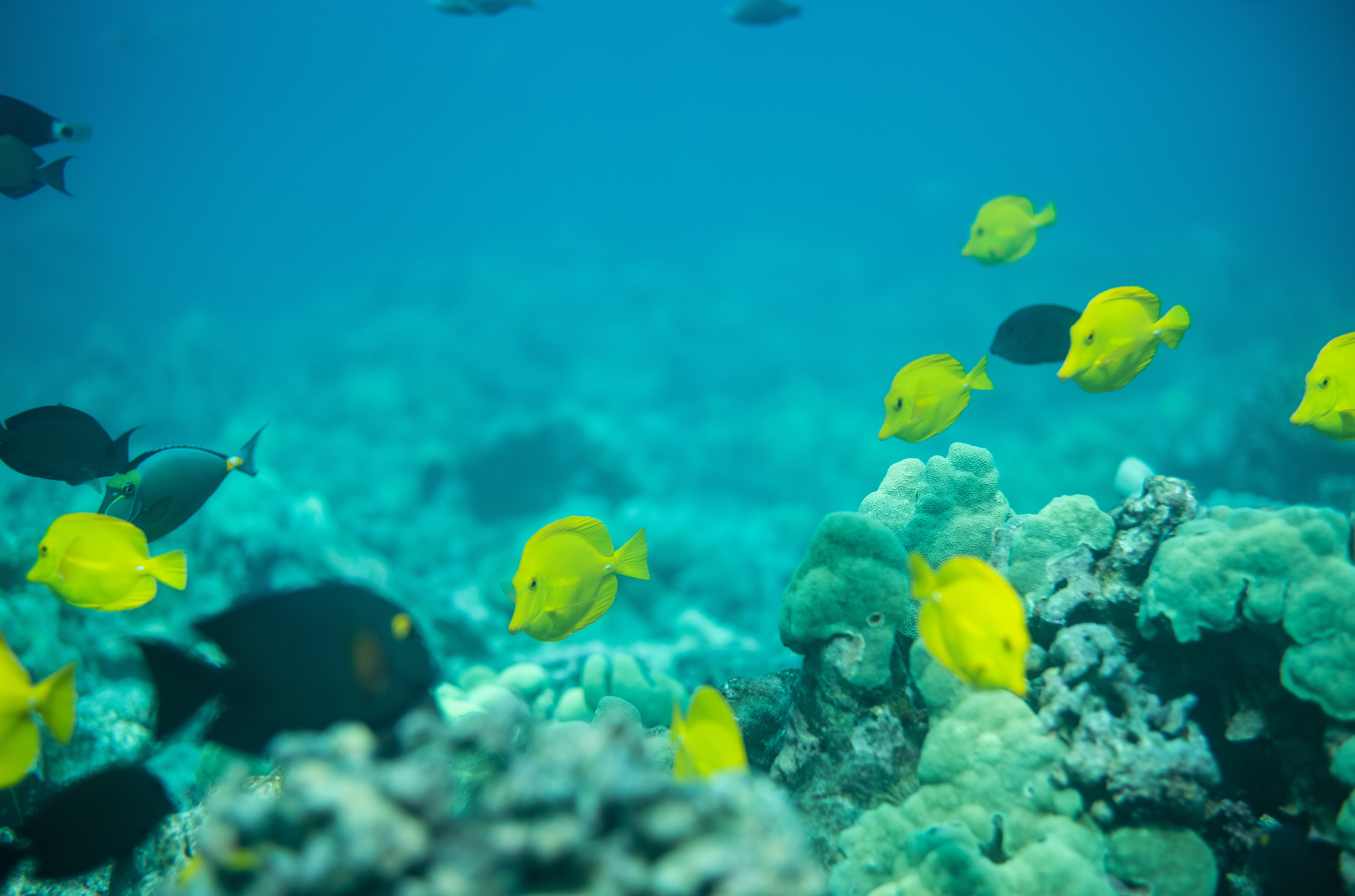
An Environmental Impact Statement Preparation Notice was recently released by the Hawaiʻi Fishers Association, which seeks to reopen Oʻahu reefs to commercial aquarium fishing. This would allow up to 15 collectors to harvest 35 different native fish and invertebrate species from Oʻahu waters — including ecologically important herbivorous reef fish that help reefs recover from bleaching and control algal overgrowth.
Commercial aquarium fishing in Hawaiʻi began in the late 1940s and has remained controversial for decades. In 2017, the Hawaiʻi Supreme Court ruled that aquarium collection permits required environmental review under the Hawaiʻi Environmental Policy Act (HEPA). More recently, legislation that would have banned commercial aquarium collection statewide (HB2101), a bill that Surfrider strongly supported, failed to advance after conference committees were never assigned.
Importantly, BLNR previously voted in 2023 to pursue a statewide ban on aquarium fishing. While that effort stalled following an Attorney General interpretation of HRS §188-31, an April 2026 court ruling clarified that BLNR does have the authority to prohibit commercial aquarium collection statewide.
This means BLNR has the ultimate authority to end this extractive trade.
Healthy coral reef systems function as critical natural infrastructure and provide essential ecosystem services that Hawaiʻi’s communities, economy, and coastlines depend upon. NOAA has documented that intact coral reefs can absorb up to 97% of wave energy, significantly reducing shoreline erosion, flooding, and storm impacts, with reefs providing an estimated $1.8 billion annually in flood protection benefits nationwide. These ecosystem services are becoming increasingly important as Hawaiʻi faces accelerating climate impacts including sea level rise, coastal erosion, and more intense storms.
Many of the reef fish targeted by the aquarium trade perform essential ecological functions that support coral reef resilience by controlling algal overgrowth and helping reefs recover from other stressors. Oʻahu reefs are already facing severe cumulative stress from climate change, wastewater pollution, urban runoff, invasive species proliferation, shoreline hardening, and intense coastal development pressure.
The broader public economic, ecological, and coastal resilience value of intact reef ecosystems likely outweighs by orders of magnitude the comparatively narrow economic benefits generated by the commercial aquarium trade, particularly where ecological risks and long-term degradation costs are borne publicly. One recent cost-benefit analysis found that a statewide prohibition on aquarium collection was the only policy scenario evaluated that produced positive net annual benefits to Hawaiʻi while negatively impacting the fewest stakeholder groups.
At the same time, significant uncertainty remains regarding the State’s ability to credibly manage additional extraction on already stressed reef ecosystems. DAR still lacks comprehensive long-term data measuring the full ecological impacts of aquarium collection under cumulative climate and pollution stressors, while enforcement limitations raise serious concerns regarding monitoring capacity, mortality reporting, catch verification, and compliance with collection quotas. As has been documented in fisheries worldwide, including Hawaiʻi, self-reported catch and mortality data may underrepresent actual impacts.
The central question is not whether aquarium collection alone causes reef collapse, but whether additional extractive pressure is compatible with already stressed reef ecosystems.
Alongside the EIS process, DAR is separately advancing proposed administrative rules that could reopen aquarium collection in West Hawaiʻi as early as this summer.
Together, these parallel processes could shape the future of aquarium fishing across Hawaiʻi for years to come.
Take Action with Us
Submit Comments by Monday, June 8
Randy Cates
Hawaii Fishers Association
David Sakoda
DLNR Division of Aquatic Resources
End Commercial Aquarium Fishing on Oʻahu
The current proposal to reopen Oʻahu reefs to aquarium fishing should be rejected.
Fully Evaluate the “No Action” Alternative
The EIS should thoroughly examine the benefits of permanently protecting Oʻahu reefs from commercial aquarium extraction.
Fully Examine Ecological and Cultural Impacts
The EIS must fully analyze impacts to reef ecosystems, aquatic life populations, public trust resources, cultural practices, tourism, shoreline protection, and long-term coastal resilience.
Consider Less Harmful Alternatives
The EIS should evaluate alternatives focused on invasive species removal or captive-bred aquaculture operations rather than extraction of native reef fish populations.
Address Major Enforcement and Data Gaps
DAR still lacks comprehensive long-term ecological data measuring aquarium collection impacts, while enforcement limitations continue to raise serious concerns regarding monitoring and compliance capacity.